
The booking that looked simple
Leila produces short recorded panels for a regional arts organisation. Her brief to the crew was plain: four speakers at a long table, one moderator, a small audience, and a camera operator who would be rolling by ten. She had booked a community hall for the morning and assumed the audio would take care of itself, because the room was quiet when she walked through it the week before.
I joined her crew that morning as the person responsible for the sound check, not the mix. That distinction matters. A sound check is a routine you run in the same order every time, so that a surprise has nowhere to hide. Leila had never seen one run start to finish, and she was candid that she thought it was a formality before the real work began.
What follows is how that morning went, told in the order it happened, including the part where my own first pass missed something.
Arriving early and listening before plugging in
We reached the hall ninety minutes before the speakers. Before any cable came out of a case, I stood in the middle of the room with my eyes closed for a minute and just listened. Nothing technical, only attention. I heard the street faintly, a fridge somewhere behind a door, and my own shoes on the floor.
Then I asked Leila to clap once, sharply, and I listened to how the sound died away. The hall had a short, slightly boxy tail, which is workable for speech. I noted it and moved on. Starting with ears rather than gear gives you a baseline, so that anything you hear later can be compared against what the room did by itself.
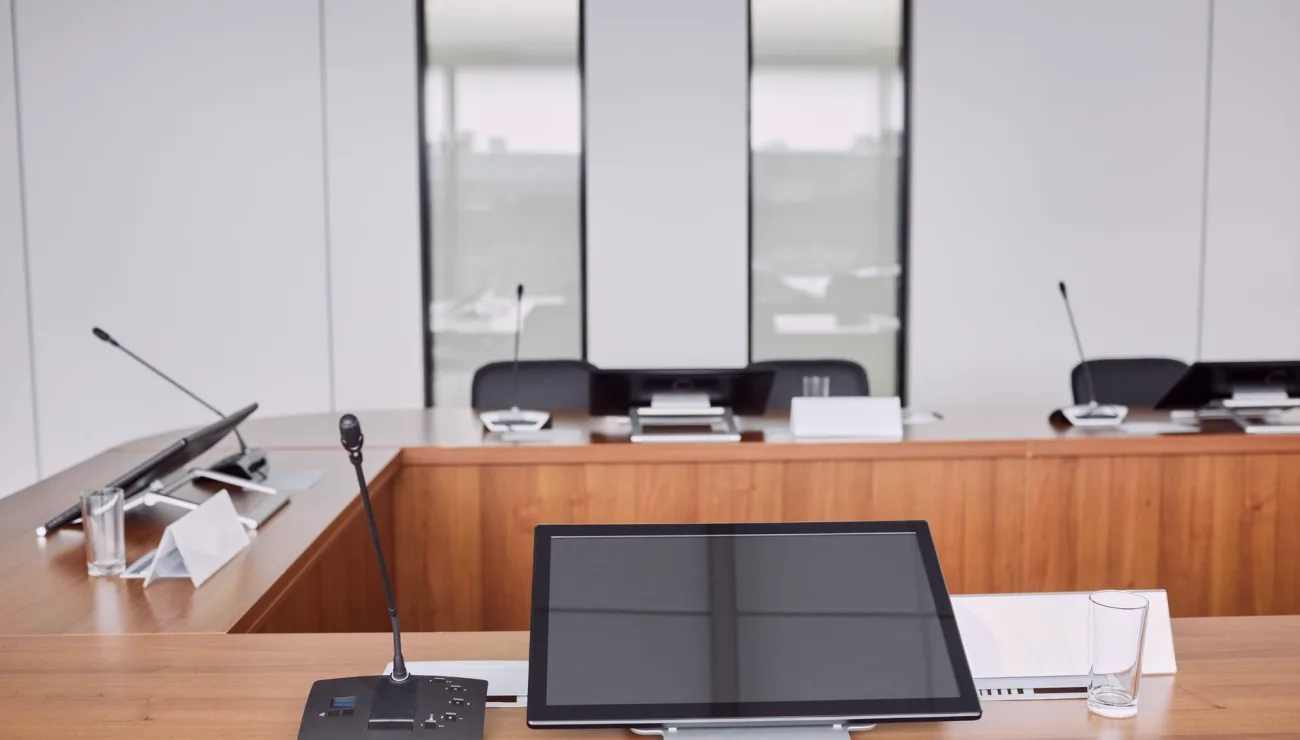
Only after that did we set the table, place the four microphones and run cables to the mixer, with one person assigned to each speaker position so nothing was guessed.
- Listen to the empty room before any gear is powered
- Clap once and judge how long the sound hangs
- Note fridges, doors and street noise on paper
Running the check one speaker at a time
The routine itself is short. I ask each speaker, one at a time, to talk at their natural speaking level, not a polite whisper and not a performance voice. I set gain while they speak, watch the meter, and check the headphone feed for anything the meter does not show, such as a rustle or a faint tick.
A good prompt is to have people say something they would actually say, like how they got involved in the subject. Counting from one to ten produces an unnaturally even voice and fools the level. Leila sat beside me wearing spare headphones and quickly picked up on what a clean voice sounds like compared with one that is slightly crowded by the room.
Each speaker also tested the loudest thing they were likely to do, a laugh or a sudden emphasis, so the headroom was set for the peak and not only the average.
- Speaker talks naturally while gain is adjusted
- Listen in headphones, not only on the meter
- Test a laugh or emphasis to set safe headroom
The sound nobody had mentioned
On the third speaker's microphone I heard a thin, intermittent rattle under the voice. It was not constant, which is why it had passed my first walk-through. It came and went every few seconds, like something loose catching in moving air.
We traced it by walking the room with the headphones on and one microphone held up toward different corners. Above the table, in the ceiling, was an air vent with a loose grille that buzzed whenever the heating cycle pushed air through it. In an empty hall with no one talking, it was nearly inaudible. Behind a quiet speaker on a close microphone, it would have been in every second of the recording.
Leila asked the venue contact to switch that unit off for the session. It took two minutes and cost nothing. Had we skipped the check, we would have discovered the rattle in the edit, where it cannot be removed without damaging the voices.
Room tone and the final pass
With the vent silenced, we recorded room tone: thirty seconds of the hall with everyone seated and silent, microphones live, exactly as it would be during the panel. This recording is quiet and dull to make, and editors are grateful for it later, because it lets them fill small gaps and smooth cuts without the sound suddenly falling into a dead silence.
We then did one last pass with all four microphones open at once, asking the speakers to talk over each other briefly the way a lively panel does. This showed that two of the microphones were picking up their neighbour more than expected, so we moved them slightly closer to their own speaker and angled them away.
By the time the audience arrived, the whole routine had taken under forty minutes, and nothing about it needed to be rushed.
- Record thirty seconds of room tone, everyone seated
- Test all microphones open at the same time
- Adjust distance and angle where neighbours bleed in
What Leila does differently now
Leila told me afterwards that the surprise was not the rattle itself but how ordinary the fix was. Nothing needed specialist equipment. It needed someone to be in the room early, listening with intent, and running the same steps whether the event was large or small.
She now books the venue for an extra hour before every panel and treats that hour as part of the recording, not an optional cushion. She also keeps a one-page list of the check in her bag, with the order of steps and a blank line for anything odd the room does. Her crew uses it even when I am not there.
That is the aim of teaching the check as a repeatable routine in the course: the person who runs it matters less than the order in which it is run.
A sound check earns its time by catching the problem that only appears once, behind a quiet voice, in a room that seemed fine. Leila's panel went ahead with clean audio because someone listened early and followed the same steps in the same order. The vent was a small thing. The habit of checking is what made it visible, and it is the part worth keeping for your own next interview or panel.