
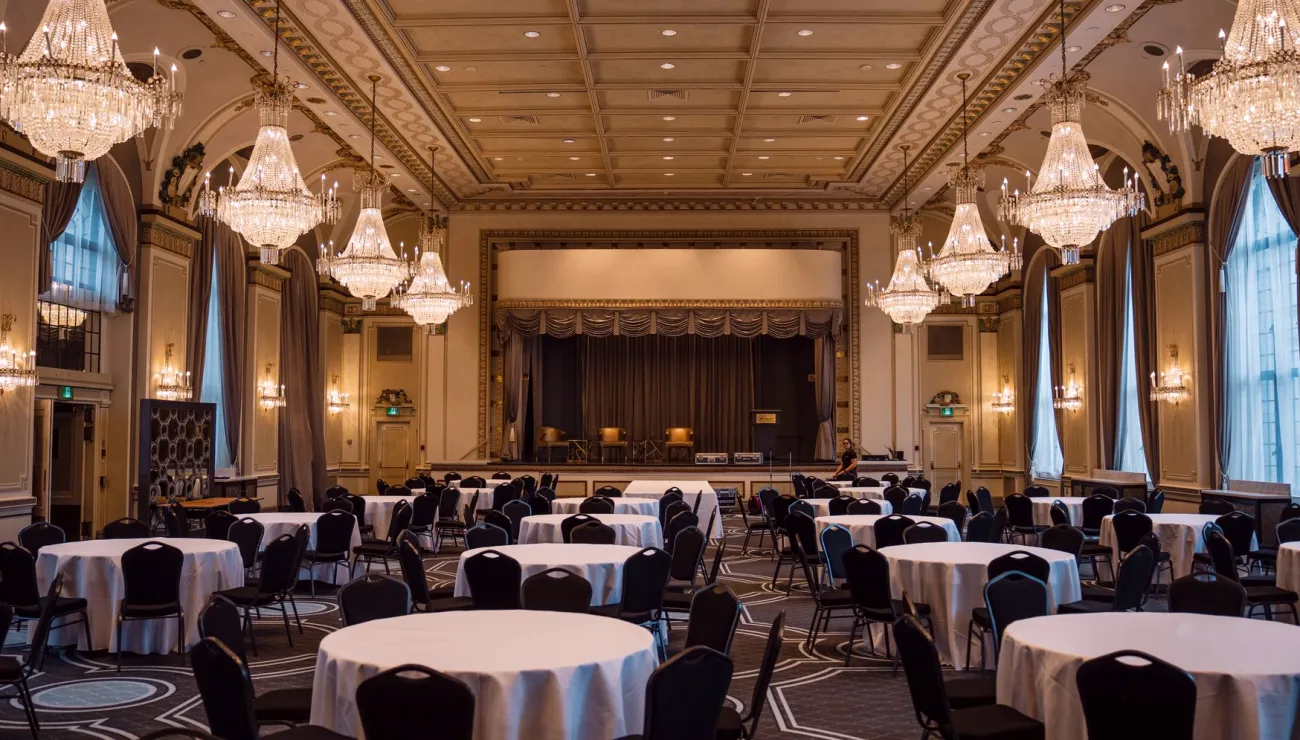
Leena and the ballroom she thought was fine
Leena produces a small streamed panel series for a regional arts group. She arrived at our course with a recording she liked the content of and could barely listen to. The room was a hotel ballroom with a high ceiling, hard walls and a carpet that looked thick enough to help. In her words, it sounded fine when people talked in it.
What she had not noticed on the day was a low hum under every voice and a washy tail on every sentence. Her headphones were closed-back and she had monitored at a low level, so both problems stayed hidden until the edit. By then the panel had gone home and the venue was booked for something else.
She brought the files to a session and asked a plain question: could the noise be fixed afterwards? I played the clip with the voices muted so she could hear only the room. That was the first useful thing we did together.
Listening to the room before listening to the speakers
The habit I teach first is to stand in the empty room and listen for a full minute before any equipment comes out. No speech, no setup, just the space. Leena had never done this. She had walked in, found the stage, and started placing microphones.
When she went back to a similar venue and tried it, she heard what the recording had been telling her: a steady drone and a quiet rattle that came and went. Both were there before anyone spoke. A recording captures everything present in the room, whether or not the people in it are paying attention.
We also record a short stretch of room tone at this point, even though the room is still quiet. It gives the editor a clean reference and gives you something to compare against once the audience arrives. A minute of silence on the recorder costs nothing and often answers questions later.
- Stand still and listen for a full minute
- Walk the room slowly, ears open
- Record room tone before anyone arrives
Finding where the hum came from
Hum is rarely mysterious once you start looking. In Leena's ballroom we walked the perimeter with headphones on and a microphone plugged into the mixer, watching the meter rise and fall. Near the back wall the drone grew louder. A wall-mounted fan unit for the air handling was running behind a panel, and nobody had thought to ask whether it could be switched off.
The venue manager agreed to turn it off during the recording and back on during breaks. The change was audible within seconds. A second smaller source turned out to be a fluorescent fixture above the stage, which buzzed faintly and sat close to her cable run. Moving the cable a few feet away helped.
The point of the exercise is not to fix everything. It is to find the one or two sources doing most of the damage and deal with those, politely and early, while the venue staff are still around to help.
Calming the echo without carrying a studio
The echo was a different kind of problem. Hard walls bounce sound back at the microphones, and speech picks up a smeared quality that no later processing fully removes. Leena assumed she would need acoustic panels. She did not.
What helped was a set of cheap, practical moves. We pulled the panel table away from the bare back wall and turned the seating to face it differently. We closed the heavy curtains along one side. We placed the lavalier microphones closer to each speaker's mouth, because the closer a microphone sits, the less of the room it hears.
Distance is the lever most people forget. Halving the distance between mouth and microphone makes the voice far louder compared with the reflections, and that does more than any amount of hanging fabric in a venue you only have for an afternoon.
- Pull tables away from bare walls
- Close curtains and use whatever soft surfaces exist
- Move microphones closer to the mouth
What changed in her next recording
Leena ran her next panel three weeks later in a similar space. She arrived early, listened, found a projector fan and a humming vending machine in the foyer, and asked for both to be dealt with. She placed microphones close, monitored with headphones at a proper level, and recorded room tone.
The result was not a studio recording, and she did not expect one. It was a clean, even recording of four people talking, with a quiet background that her editor could work with in an hour rather than a day. She told me the biggest surprise was how little equipment changed. Most of the improvement came from arriving earlier and paying attention.
That is the realistic outcome of this module. You do not remove a room, you learn to read it and make a handful of sensible decisions before the red light goes on.
Leena's case is typical of what we see. The noise she feared was mostly avoidable, and the avoiding happened before recording, not after. A minute of listening, a quick walk around the venue, a fan switched off and microphones moved closer will do more than any repair later. Take that habit to your next venue and trust your ears before your equipment.