
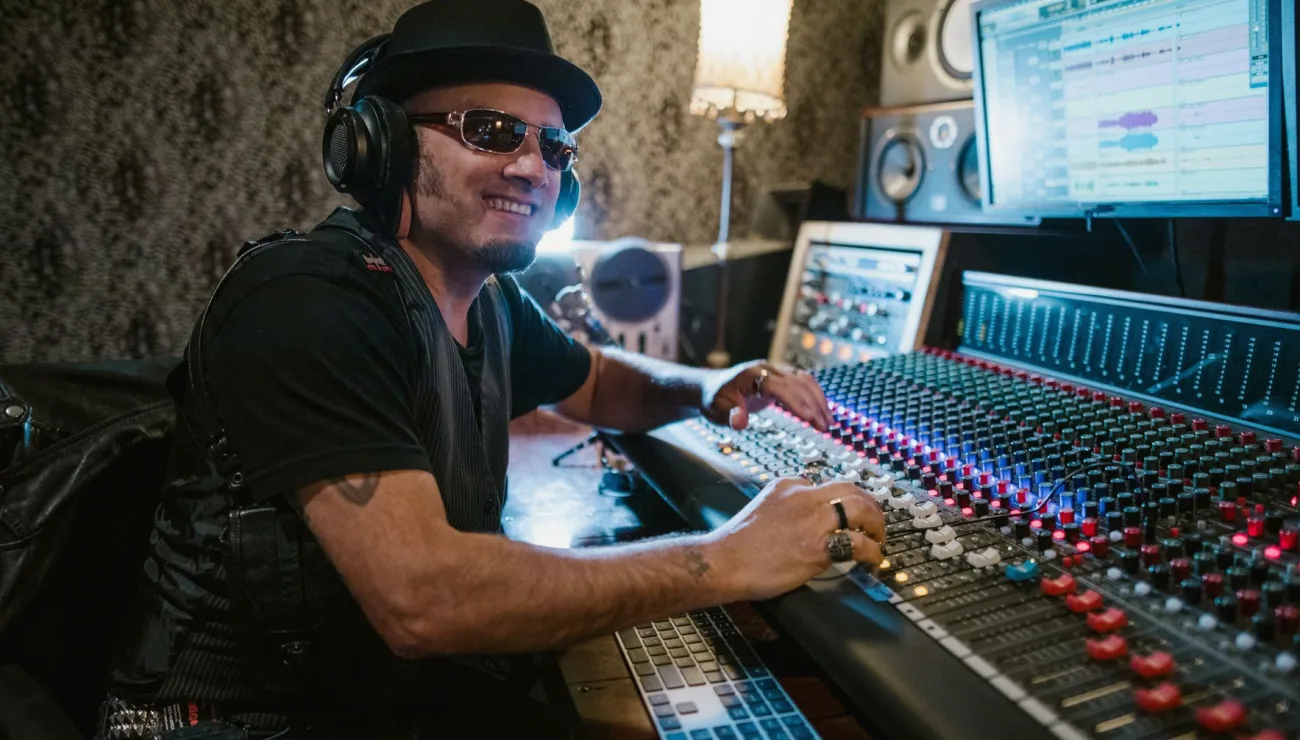
The two setups side by side
Most crews who come through the course start with one of two monitoring habits. The first is the simple chain: one pair of closed-back headphones fed straight from the mixer's main output, with the operator listening to exactly what goes to the camera. The second adds a reference path: a separate headphone feed from the recorder, so the operator can switch between the live mix and what is actually landing on the card.
Both are legitimate, and I have worked with both on interview days and small panels. The difference is not quality of equipment but how much you can verify while the room is in use. The simple chain tells you what the mixer is sending. The reference chain tells you what was captured, which is a different and sometimes uncomfortable truth.
This note is the last of four on mixer setup and monitoring. Earlier parts dealt with setting gain and routing. Here the question is narrower: once levels are set, how should you listen, and is the extra step worth the cables and the attention it asks for?
What headphones only does well
The simple chain is quick to rig and easy to teach. You plug in, set the headphone level so it is comfortable but not flattering, and listen for the things that spoil speech: clothing rustle on a lavalier, plosives on a handheld, a hum that was not there during the walk-through. For a single interviewee in a quiet room, that is often all the job needs.
It also keeps your attention on the people. With one feed there is nothing to switch, so your hands stay on the faders and your eyes stay on the speaker. New operators in the course tend to make fewer errors on this setup in their first week because there is less to manage.
Its weakness is trust. If a cable fails between the mixer and the recorder, or a card fills, the headphones keep playing a perfectly good signal while nothing is being stored. You hear a healthy mix and assume a healthy recording.
- Fast to set up and easy to learn
- Keeps attention on speakers and faders
- Cannot reveal a failed recording path
What the reference feed adds
A reference feed takes the headphone signal from the recorder's own monitor output, or from a second return, so you hear what has passed through the whole chain. When you switch to it for a few seconds at the start of each session, you confirm that the recorder is armed, that the right channels are assigned and that the level on the card matches what you set.
It also exposes problems the mixer cannot hear. Limiter pumping, a channel routed to the wrong track, a sample rate mismatch that shows up as a faint crackle: these appear on the reference and not on the mixer feed. On a panel with four microphones, a single mis-assigned track can ruin one speaker's contribution without any visible warning.
The cost is attention and a little hardware. You need a headphone splitter or a recorder with a dedicated monitor output, and you need the discipline to check regularly instead of only at the beginning.
Where each one fits
For a single interview with one microphone, one recorder and a quiet room, headphones only is sensible. The risk is low, the session is short and the extra check adds little. Keep the habit of glancing at the recorder's meters at intervals, because that is your free substitute for a reference feed.
For panels, multi-speaker interviews and anything that cannot be repeated, the reference feed earns its place. The more channels you carry and the longer the session runs, the more ways there are for a path to quietly fail. A two-second listen to the recorder return every ten minutes costs almost nothing against a lost afternoon.
Remote guests sit somewhere between. If the guest audio arrives through a laptop into the mixer, a reference listen confirms that the return feed and the recording both carry the voice cleanly, which is the part crews most often assume rather than verify.
- One speaker, quiet room: headphones only
- Panels and repeat-proof events: add the reference
- Remote guests: check the recorder return, not just the mixer
A routine that works with either
Whichever setup you choose, the habit matters more than the gear. Before the session, record ten seconds of room tone and play it back from the card, not from the mixer. That one step catches most routing and card problems before anyone is seated.
During the session, set a rhythm: glance at meters constantly, listen to the recorder path at natural breaks, and keep your headphone level fixed so that a change in what you hear is a change in the signal, not in your volume knob. Operators who creep the level up through the afternoon end up chasing noise that was always there.
At the end, play back a few seconds of each channel before packing anything away. If something is wrong, you are still in the room, the guests are still nearby and a pickup line can be recorded. Once the cables are coiled, that option has gone.
- Play back room tone from the card first
- Fix headphone level and leave it alone
- Check each channel before packing up
My recommendation
For the crews we teach, camera operators and small streaming teams who rarely have a second person on sound, I recommend starting with headphones only and adding the reference feed as soon as you take on panels or any event that cannot be re-recorded. The step up is modest: one splitter, one switch and a habit of checking.
If you can afford only one change, make it the playback of room tone from the card before the session starts. It delivers most of what a reference feed does, costs nothing and fits any mixer. The reference feed then becomes the second layer, protecting you during the long middle of a session when attention drifts.
Good monitoring is not about hearing more. It is about knowing that what you hear is what you are keeping.
Headphones only is the right default for short, single-speaker work, and a reference feed is the right addition once a session cannot be repeated. Whichever you use, confirm the recording from the card before guests sit down and again before you pack. Levels set well matter little if the path to the recorder has quietly failed, and a few seconds of listening is the cheapest insurance in the kit.