
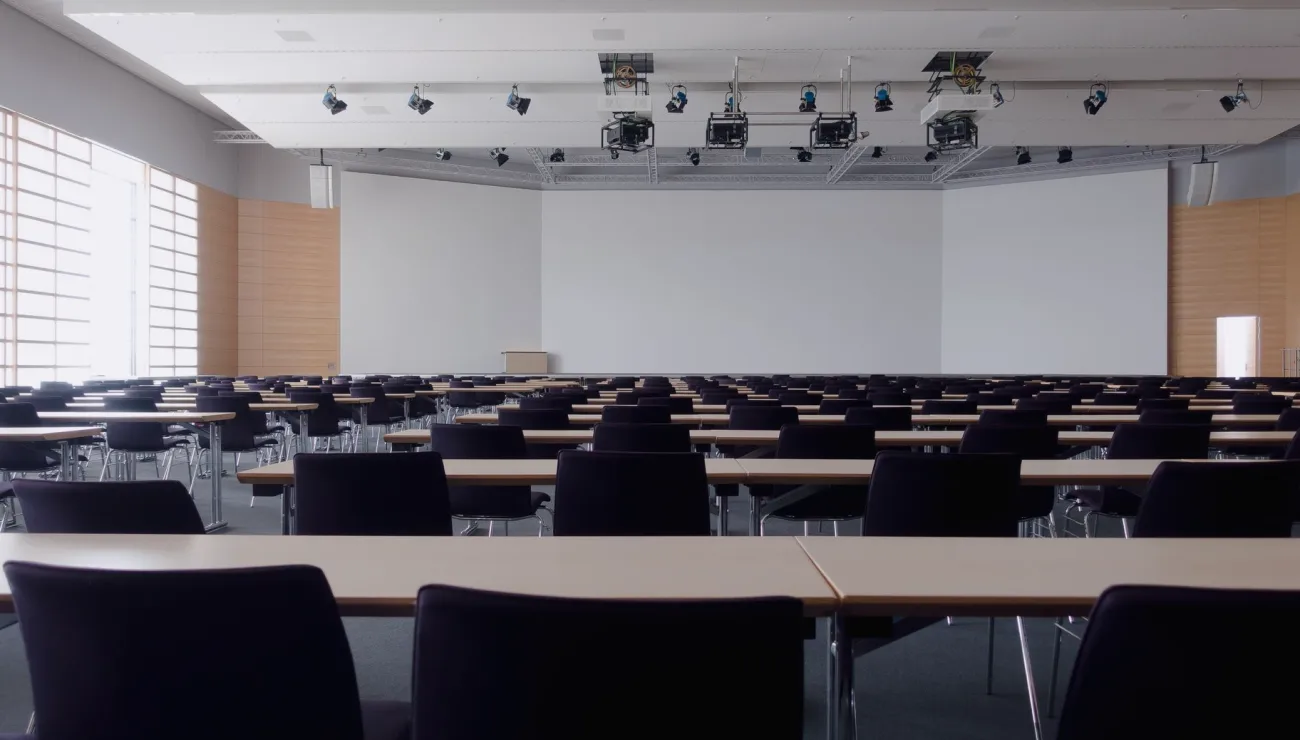
Why the module now starts with a walk
For the early autumn intake, the module on avoiding room noise opens differently. Before anyone touches a microphone, learners walk the venue with a notepad and listen. It sounds almost too simple, but it has changed how quickly people find the problems that spoil a recording.
In earlier groups we began with theory about reflections and noise floors, and learners nodded along. Then they arrived at a real room and still missed the fridge humming behind the panel table. Starting with the walk puts the listening first and the vocabulary second, which is the order a working crew needs on the day.
The walk takes about fifteen minutes in a typical meeting room or small hall. Learners cover the whole space, not only the spot where the speakers will sit, because noise often arrives from a corridor, a ceiling void or a neighbouring room.
What learners listen for
The first pass is simply standing still and counting sources. Learners close their eyes for a minute in the middle of the room and name what they hear: air handling, a projector fan, traffic through a window, a lighting transformer, footsteps from the floor above. Most rooms give up four or five sources in that single minute.
The second pass is a clap test. A sharp clap in the speaking position shows how long the room rings afterwards, and clapping near hard walls or glass shows where the worst reflections sit. Learners mark those spots on a rough sketch of the floor plan.
The third pass is about hum. Learners listen near power outlets, dimmers and old fluorescent fittings, because electrical buzz is easy to miss with the naked ear until headphones make it obvious.
- Steady sounds: fans, air handling, refrigeration
- Intermittent sounds: doors, lifts, corridor voices
- Reflections: bare walls, glass, tiled floors
- Electrical hum: dimmers, transformers, old fittings
Deciding what can be fixed on site
Not every noise can be removed, and part of the training is sorting them honestly. A projector fan can often be switched off until the presentation begins. A door can be wedged shut or a sign placed on it. A refrigerator may be unplugged for an hour if someone with authority agrees and remembers to plug it back in.
Other problems need a different answer. Traffic outside a window cannot be stopped, but moving the speakers to the far wall, closing heavy curtains or choosing a closer microphone position reduces how much of it the recording carries.
Learners practise making these calls in a short exercise. Each is given a floor plan with a list of noise sources and asked what they would change, what they would work around and what they would ask the venue to help with, in that order.
Softening echo without special equipment
Echo is the complaint we hear most from camera operators and producers, and it rarely needs expensive treatment. Soft furnishings absorb a surprising amount: a few heavy curtains drawn across glass, a rug laid under the table, coats hung on a rail behind the speakers all shorten the ring of a room.
Placement helps as much as absorption. Moving a panel table away from a bare back wall, or turning it so speakers face the softer side of the room, changes the sound the microphones collect. Learners try two arrangements in the same room and compare recordings through headphones.
The comparison matters because it trains the ear. Hearing the difference between a table against the wall and the same table a metre forward makes the advice stick better than any diagram would.
Recording room tone as part of the check
Once the obvious fixes are made, learners record room tone: thirty seconds or so of the venue sitting quietly with everyone still. It is the last step of the walk and the one most often skipped by people new to location work.
Room tone does two jobs. It gives an editor clean material to fill gaps between edits, and it works as a record of what the room sounded like when the session began. Listening back to it in headphones usually reveals one more problem, such as a faint buzz or a distant compressor, that the walk missed.
Learners label each file with the venue and the position of the recorder, a small habit that saves time when the footage reaches the edit.
How the revised module is run
The module is taught by me alongside the other instructors, and it follows the same pattern as the rest of the curriculum: a short explanation, a practical exercise, then a review of what was recorded. Learners are expected to arrive with basic familiarity with a recorder and headphones, nothing more.
Each learner finishes with a one-page venue notes sheet they wrote themselves: noise sources, what was fixed, what was worked around and the room tone file name. It is meant as a template they can reuse on their own shoots.
We have kept the practical outcomes modest. The module will not make a poor room sound like a studio, but it will help learners find the avoidable problems early and leave the unavoidable ones documented.
The venue walk is a small change, but it moves the most useful habit in location sound to the front of the module: listen to the room before deciding anything about equipment. Learners who do it carry the notes sheet into later modules on microphone placement and sound checks, and the early weeks of this autumn intake have shown them finding problems faster than before.