
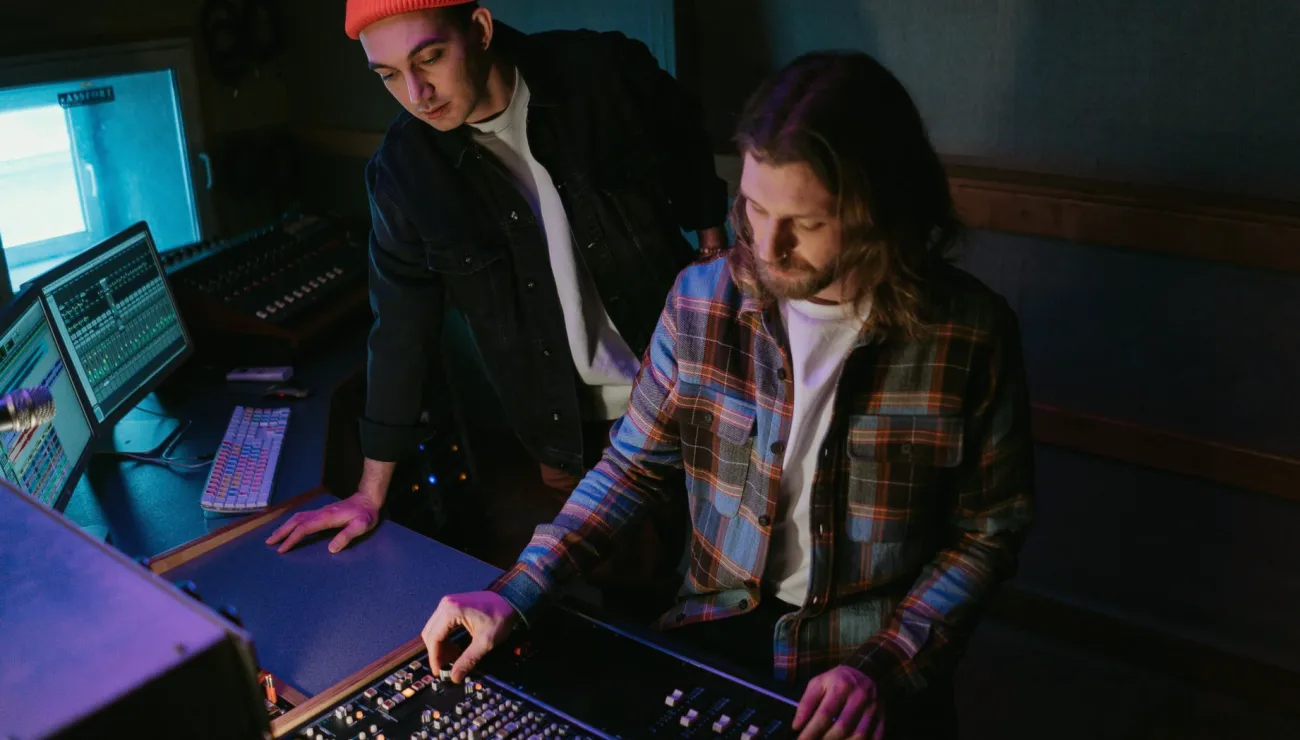
Why this question comes up so often
Producers usually ask about cost after a bad experience: an interview that sounded like it was recorded in a stairwell, or a panel where an air handler hummed under every answer. The worry is reasonable. Room noise feels like a problem you either pay to fix or live with, and it is rarely obvious which one applies to your venue.
In practice, most of what makes a room sound poor can be reduced with time and attention rather than purchases. That is the core of this module in the course: spotting echo, hum and background noise before recording starts, then deciding what is worth treating.
So the honest answer to what it costs is that it depends on three things: how much time you give the venue before the cameras roll, how much you need to change in the room itself, and how much you can avoid by choosing the room well.
The biggest cost driver is time, not gear
A venue walk with headphones and a handheld recorder takes perhaps twenty minutes, and it tells you more than any specification sheet. You hear the refrigerator that cycles on every few minutes, the projector fan, the traffic that only shows up when a door opens.
When that walk happens the day before, fixing things is cheap: you move a table, ask for the ventilation to be switched off for an hour, or pick a different corner. When it happens ten minutes before the guests arrive, every fix competes with setup, and the price is paid in a rushed sound check and compromises you then carry into the edit.
Teams that budget a fixed block of arrival time for listening tend to spend less overall, because they find problems while they are still easy to solve.
- Arrive early enough to listen before building anything
- Walk the room with headphones and a recorder running
- Note any noise that cycles on and off
What the room itself adds to the bill
Hard walls, glass and bare floors cause echo, and echo is the most expensive noise to remove after the fact. Treating a room can mean as little as closing curtains and laying rugs, or as much as hiring in portable absorbent panels, which carry a delivery and handling cost.
Size matters too. A small meeting room needs far less treatment than a hall, and a hall may not be treatable at all within a sensible budget. In that case the cheaper route is nearly always closer microphones and a tighter pickup pattern rather than changing the space.
The course teaches how to judge this quickly: clap once in the room, listen to how long the tail rings, and decide whether the answer lies in the room or in the microphone.
Hum, hiss and the cost of finding the source
Electrical hum is a different kind of problem. It costs little in equipment but can cost a lot in guesswork if nobody tracks it down. Lighting dimmers, badly grounded power strips and long unbalanced cable runs are frequent causes, and each is a quick fix once identified.
The trap is replacing microphones or buying filters before checking the simple things. Unplug one item at a time, move a cable away from a power lead, swap to a balanced connection. These steps cost minutes.
When a source cannot be removed, such as building ventilation you do not control, you plan around it with microphone placement and gain, and you record a clear stretch of room tone so the edit has something honest to work from.
- Check power strips and dimmers first
- Separate audio cables from power leads
- Record room tone before speakers arrive
Choosing a venue is the cheapest fix of all
If you have any say over where the recording happens, this is where most money is saved. A carpeted room away from a main road, with soft furnishings and no loud machinery nearby, needs almost no treatment. A glass-walled atrium beside a kitchen needs a great deal.
Ask a few direct questions when booking: what is above, below and beside the room, whether the ventilation can be paused, and whether there are events scheduled nearby. A short phone call often reveals more than photographs.
Spending a little more on a quieter room usually costs less than the hours of extra setup, the extra equipment and the cleanup in editing that a noisy one demands.
Setting a sensible budget for the work
Rather than a fixed figure, think in layers. First, time for a venue walk and a listening test. Second, small practical changes to the room at no real cost. Third, modest additions such as blankets, rugs or portable panels where they clearly help.
Only then consider more involved options, and only if the first layers have not solved the issue. Most interviews and small panels never need to go past the second layer.
Keep a note of what you changed and what it achieved. After two or three shoots you will have your own sense of what a typical venue costs you in time and effort, which is more useful than any quoted number.
- Layer one: listening time
- Layer two: free changes to the room
- Layer three: small additions where needed
The cost of reducing room noise is mostly decided before any equipment arrives: by how early you listen, how well you choose the room and how patiently you trace a problem to its source. Spend time first, change the room second and buy things last. That order keeps the bill small and gives you cleaner speech than treating the symptoms after the recording is done.